We’re pleased to announce PyPy 2.3, which targets version 2.7.6 of the Python language. This release updates the stdlib from 2.7.3, jumping directly to 2.7.6.
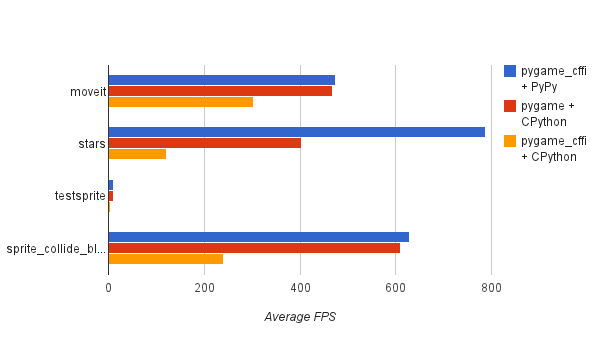
This release also contains several bugfixes and performance improvements, many generated by real users finding corner cases. CFFI has made it easier than ever to use existing C code with both cpython and PyPy, easing the transition for packages like cryptography, Pillow(Python Imaging Library [Fork]), a basic port of pygame-cffi, and others.
PyPy can now be embedded in a hosting application, for instance inside uWSGI
You can download the PyPy 2.3 release here:
http://pypy.org/download.html
PyPy is a very compliant Python interpreter, almost a drop-in replacement for CPython 2.7. It's fast (pypy 2.3 and cpython 2.7.x performance comparison; note that cpython's speed has not changed since 2.7.2) due to its integrated tracing JIT compiler.
This release supports x86 machines running Linux 32/64, Mac OS X 64, Windows, and OpenBSD, as well as newer ARM hardware (ARMv6 or ARMv7, with VFPv3) running Linux.
We would like to thank our donors for the continued support of the PyPy project.
The complete release notice is here
Cheers, The PyPy Team